Clear answers before you entrust us with your property.
Quotes, frequency, access, contracts, changes, multi-site service, products, warehouses and service areas: find the answers here that explain how our recurring commercial cleaning works.

Scope, frequency, schedule and additional requests should be clear before service becomes routine.
Questions are grouped around how the contract actually works.
Browse the entire page or go directly to the topic that matches your situation.
Before getting started
Address, square footage, site visit, frequency and information to provide.
View questions →Active service & contract
Scope, frequency, quality, additional requests, changes and contract adjustments.
View questions →Access & coordination
Keys, alarms, service hours, accessible areas and building operations.
View questions →Frequently asked questions about commercial cleaning.
The answers below explain our approach without adding unnecessary promises or invented details.
Quote & assessment
Send us the address, property type, main areas to maintain and desired frequency. Certain details can then be clarified before the final proposal.
No. Provide the information you have. For larger or more complex properties, certain details can be confirmed afterward.
Not necessarily. It can be useful when a property is large, has multiple areas or is difficult to assess accurately from a distance.
The address, building type, main areas, desired frequency and any access or scheduling constraints are the most useful details.
No. Square footage helps, but scope, frequency, types of areas, access, traffic and scheduling constraints also affect the proposal.
Yes. You can provide your preference or simply describe how the building is used. Frequency can then be structured according to the areas and traffic level.
Frequency, scope & quality
Depending on the property, service can be structured from 1 to 5 visits per week. Certain areas can also have a different frequency within the same contract.
It is the list of areas, tasks and frequencies included in the contract. It serves as the reference to avoid different interpretations from one visit to the next.
Not necessarily. Some tasks are completed at every visit, while others follow a different frequency defined in the scope.
The issue should be tied to a specific area or task so it can be understood, corrected and followed up consistently.
A documented scope makes replacement coverage easier because tasks and priorities do not depend solely on one person’s memory.
NettoyageMobile.ca is primarily focused on recurring commercial cleaning. One-time requests can be kept separate from the contract and evaluated individually.
Access, keys & schedules
Yes. Service can be organized before opening, after hours or within a coordinated service window based on building activity and access.
Access procedures must be defined with the client before service begins and adapted to the building’s reality. Specific details depend on the property.
Any important access change should be communicated before the next visit so service can be coordinated properly.
Yes, when it works for the building. Certain tasks may still be easier to organize before opening or after business hours.
An inaccessible area cannot be serviced normally. The client can be informed and access can be coordinated for a later visit depending on the situation.
Yes. The service window is one of the items to clarify before service begins in order to reduce conflicts with normal site operations.
Contracts, additions & changes
Yes. If needs change, certain areas, tasks or frequencies can be reassessed and clearly incorporated into the contract.
It is a task or area that was not part of the planned recurring service. It should be clarified separately rather than becoming an implied expectation.
Specific consumables should be identified in the proposal. It is better to distinguish them clearly rather than assume they are automatically included.
Yes. Frequency can be reassessed when building use changes or when certain areas require a different schedule.
The new area can be assessed and then added to the scope if necessary. The goal is to keep the contract aligned with the building’s current reality.
Yes. The same property may require daily tasks in certain areas and less frequent work in others.
Multiple properties & multi-site
Yes, when the addresses, frequencies and constraints allow for a viable operating structure. Each property still keeps its own defined scope. View our multi-site approach →
Yes. Even for the same client, buildings can have different uses, frequencies and constraints.
When possible, grouping properties geographically can improve operational efficiency and route stability.
Yes. Each site can be structured around its own needs rather than forcing the same frequency across the entire portfolio.
Yes. For multiple properties, it helps to have one clear communication point so changes can be tied to the correct site and scope.
Equipment, warehouses & scope limits
The proposal can specify the items planned for service delivery. Any special building requirements should be clarified before service begins.
A specific requirement can be discussed before service begins to confirm that it is compatible with the scope and building surfaces.
Yes, for routine commercial cleaning of administrative offices, washrooms, break rooms, employee spaces and accessible areas included in the contract.
Our service focuses on recurring commercial cleaning. Technical areas, industrial processes, production areas or regulated environments must be evaluated separately.
NettoyageMobile.ca is focused on recurring commercial cleaning for businesses and professional properties.
Production or technical areas should not be assumed to be included. They require a specific assessment separate from routine commercial cleaning.
An address, property type and desired frequency are enough to get started.
Ask my question →Recurring commercial cleaning vs specialized work.
This distinction prevents promising a type of service that is unrelated to normal commercial building cleaning.
Recurring commercial cleaning
Areas normally used by employees, customers and visitors, according to the contract scope.
Specialized work
Operations that go beyond routine commercial cleaning must be defined separately.
Also visit the page for the service relevant to you.
Our service pages explain the cleaning approach for each type of property in more detail.
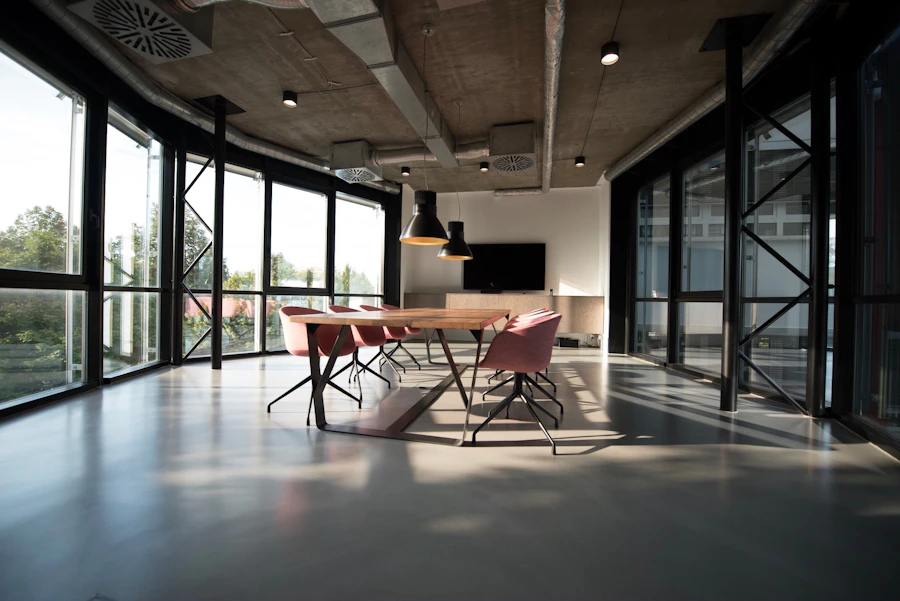
Office cleaning
Reception areas, workstations, meeting rooms and employee spaces.
View service →

Showrooms & reception
Customer areas, sales offices, washrooms and interior presentation areas.
View service →
Coverage questions across Greater Montreal.
Exact coverage always depends on the address, frequency and operational route feasibility.
North Shore
Boisbriand, Blainville, Terrebonne, Mascouche, Mirabel, Sainte-Thérèse, Rosemère, Deux-Montagnes and other areas based on route feasibility.
View the North Shore page →Montreal
Offices, commercial buildings and professional properties depending on the address and frequency.
View Montreal →Laval
Commercial properties, offices, automotive, distribution and light industrial facilities.
View Laval →
Tell us about your property and we’ll clarify the next step.
An address, building type and desired frequency are enough to get started.